A clear freelance invoice does two jobs: it tells your client exactly what to pay and gives you a record to support your business income and tax reporting. To invoice clients as a freelancer in Canada, issue a numbered invoice with your business and client details, a clear description of the work, the amount and due date, and any sales tax you’re required to charge. RubiWo helps Canadian freelancers keep expense records organized alongside the invoicing details that feed into their bookkeeping.

Key Takeaways
- Use a numbered invoice that clearly connects the work to the agreed scope.
- Check your GST/HST registration status and the place-of-supply rules before charging tax.
- Set a payment deadline and keep invoices, receipts, and follow-up records together.
What Must a Canadian Freelance Invoice Include?
A Canadian freelance invoice should identify who is billing whom, what work was delivered, how much is owed, and when payment is due. A consistent format helps your client process the charge and gives you a useful record for your business books.
Include:
- Your details: Your name or business name, mailing address, and contact information.
- Client details: The client’s name or business name and billing address.
- Invoice number and dates: Use a unique number for each invoice, plus the issue date and payment due date. A sequential invoice numbering system makes invoices easier to track.
- Work details: Describe the services, dates or project period, hours or units, rate, and line-item amounts. Use language that matches your agreement or approved scope.
- Totals and currency: Show the subtotal, any applicable taxes, the total due, and the currency. Label the amount in Canadian dollars (CAD) when that’s the agreed billing currency.
- Payment instructions: State accepted payment methods and any reference the client should include with payment.
- Tax details, if applicable: If you’re registered to collect GST/HST, show your registration number and the tax charged as required for the transaction.
A reusable invoice template can reduce missed fields, but review each invoice before sending it. For larger projects, milestone billing lets you invoice at agreed stages — a deposit, a delivery milestone, and final approval — with those stages and amounts stated in your contract or written scope.
How Do GST/HST and Provincial Taxes Affect Your Invoice?
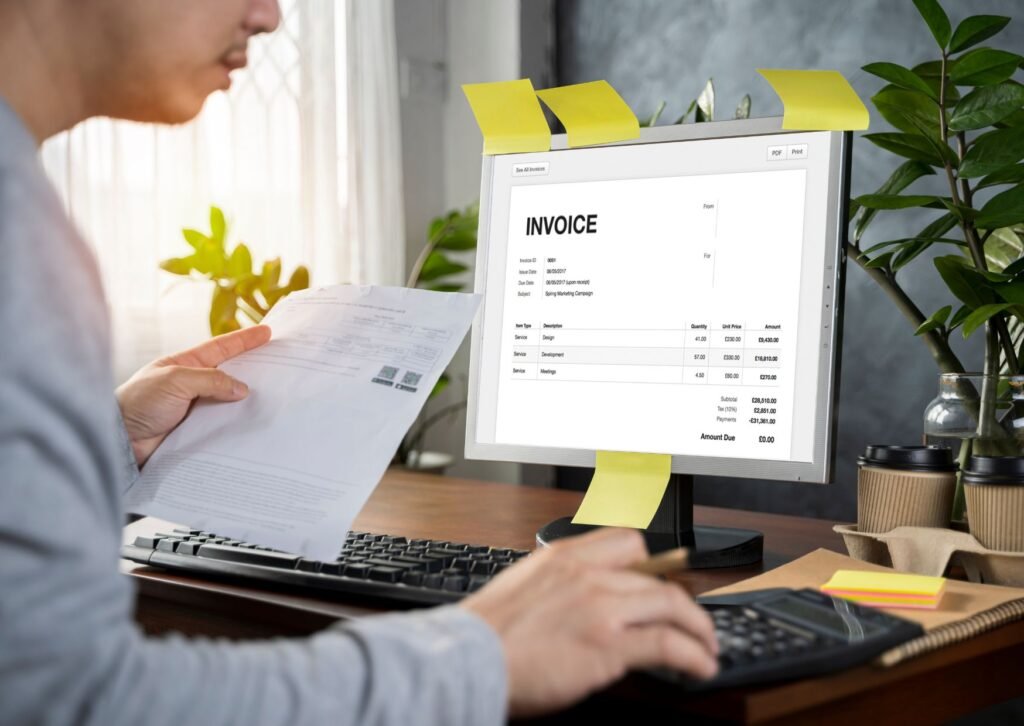
Charge GST/HST when you’re registered and the supply is taxable, using the rate determined by the applicable place-of-supply rules. Your client’s location can affect the rate, so confirm the transaction details before preparing the invoice.
If you’re a small supplier, you generally don’t have to register for GST/HST while your worldwide taxable supplies remain at or below the $30,000 small supplier threshold over four consecutive calendar quarters. The calculation has specific timing rules, including a separate test for a single calendar quarter, so check the CRA rules when you approach the threshold. You can also register voluntarily; once registered, you must collect and remit tax on applicable taxable supplies and meet your filing obligations.
After GST/HST registration, include your GST/HST registration number on invoices when required and show the tax amount clearly. Your registration number is associated with your GST/HST account; keep your records of tax collected and eligible input tax credits, which are credits for GST/HST paid on business purchases. Report the amounts on your GST/HST return and file returns by their due dates.
The correct rate depends on the place of supply and the nature of the service. HST rates by province differ, and some provinces have separate provincial sales tax (PST); Quebec has the Quebec sales tax (QST). GST/HST registration doesn’t automatically settle your PST or QST obligations, so check the relevant provincial rules for your business and client.
If your invoice includes more than one tax, show each tax separately and label it. Keep the client’s location, service description, invoice date, and tax calculation with your records so you can explain how you applied the place-of-supply rules.
What Payment Terms Help You Get Paid on Time?
Clear payment terms give your client a specific deadline and a straightforward way to pay. Agree on the terms before work begins, then repeat them on every invoice.
Choose a deadline that fits the project and your client relationship. Due on receipt requests payment as soon as the client receives the invoice; net 15 and net 30 set payment due 15 or 30 days after the invoice date. Write the exact due date on the invoice so there’s no need to calculate it.
List practical payment instructions, such as your Interac e-Transfer email address or the details for another agreed method. For project work, use a deposit or milestone schedule when both parties agree to it, and send each invoice as soon as its billing milestone is reached.
To manage late payments, keep a record of the invoice, due date, reminders, and any client response. Send a courteous reminder shortly before or after the deadline, then follow up with the outstanding invoice attached. If you plan to charge late payment fees, agree on the fee and the conditions in writing before the work starts, and ensure the terms are lawful and clear.
How Can RubiWo Simplify Your Invoicing and Records?
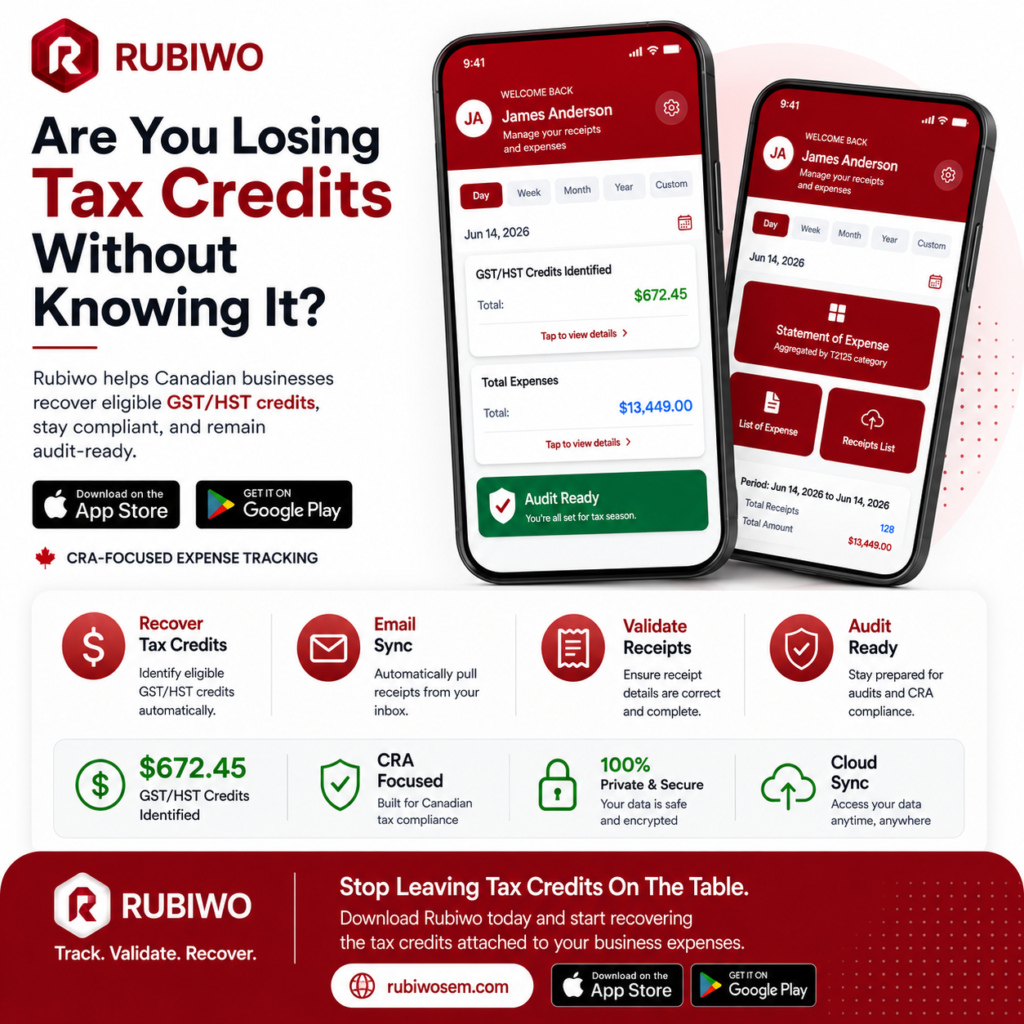
RubiWo helps you keep expense records organized so your invoicing and tax workflow has supporting documentation in one place. For freelance invoicing in Canada, pair that expense record with a consistent process for issuing invoices, tracking payments, and preparing your business income records.
RubiWo is a CRA-compliant expense tracking app for Canadian freelancers and small businesses, available on iOS and Android. It validates receipts against CRA rules, including GST/HST, PST, and the $500 buyer-name rule, and keeps data in Canada. These features support expense documentation — they don’t replace checking your invoice tax obligations or filing your returns.
As a self-employed person or sole proprietor, you generally report business income and expenses on Form T2125, Statement of Business or Professional Activities, with your personal income tax return. Keep copies of invoices you issue, client agreements, proof of payment, receipts, and tax records so the amounts on your books can be traced to their source.
If you bill in a foreign currency, record the amount and currency clearly, then use an appropriate exchange rate to convert it for Canadian tax reporting. The CRA accepts the Bank of Canada exchange rate for the day of the transaction, or another source where its use is consistent — check the current CRA guidance for the method that fits your situation.
A practical routine is to issue a numbered invoice when a payment milestone is reached, record the payment when it arrives, and save related business receipts in RubiWo. You can try RubiWo on iOS or Android as a practical way to keep your expense records organized alongside that workflow.
A Consistent Invoice Helps Protect Cash Flow and Tax Records
A consistent invoice process gives you clearer payment expectations and a reliable trail for tax reporting. Use a repeatable template, check the GST/HST or provincial tax treatment for each transaction, and keep the invoice linked to the work agreement and payment record.
Before sending an invoice, confirm the client details, invoice number, service description, currency, tax calculation, and due date. Save the final invoice and any follow-up or payment confirmation with your bookkeeping records.
Frequently Asked Questions
Do I need to register for GST/HST before I invoice clients? You generally need to register once your taxable supplies exceed the small supplier threshold under the applicable CRA timing rules. You can register voluntarily before reaching that threshold, and registration brings obligations to collect and remit tax on taxable supplies and file GST/HST returns.
What should you put on an invoice if you’re not registered for GST/HST? Show your business and client details, invoice number and dates, work description, amount due, currency, payment terms, and payment instructions. Don’t charge GST/HST or display a GST/HST registration number if you’re not registered.
Which GST/HST rate should you charge a client in another province? Use the place-of-supply rules to determine the applicable rate for the service or product, considering the transaction and client location. Provincial rules differ, so check CRA guidance for the specific supply and consider professional tax advice if the treatment is unclear.
How long should you keep freelance invoices and receipts? Keep invoices and supporting records for the period required by CRA, which is generally six years from the end of the tax year they relate to. Some circumstances require a longer retention period, so confirm the current CRA record-keeping rules for your situation.